
When the Dollar Rises, Rural Areas in Indonesia Are In Fact Heavily Impacted
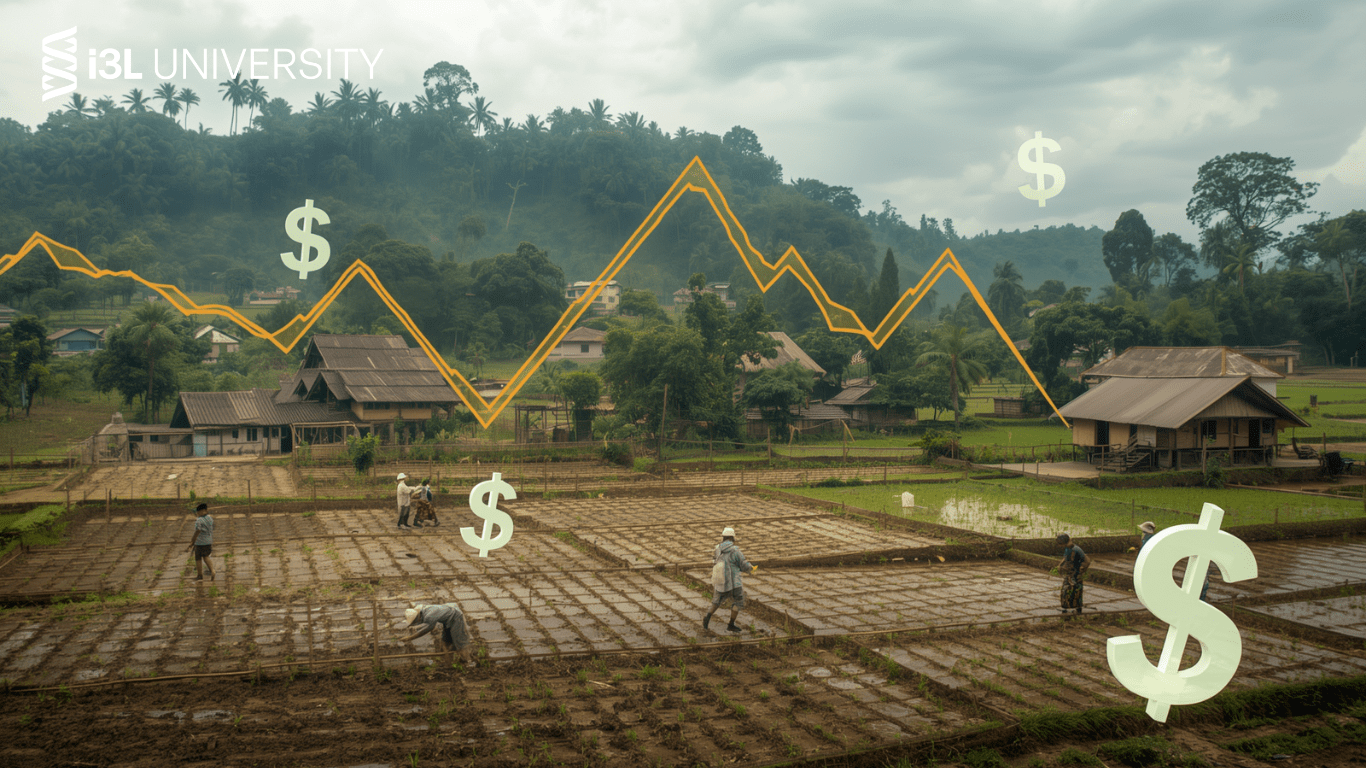
Jakarta, 22 May 2026 – A recent statement from Indonesia’s President that “people in villages do not use US dollars” has sparked public discussion in Indonesia. While this might seem reasonable at first, it has sparked a bigger conversation about how global economic changes affect daily life in Indonesia, even in rural areas.
Although yes, most people in villages use Indonesian rupiah for their transactions, not US dollars. But still, because the world’s economies are connected, changes in the value of the US dollar can affect everyone. Even people who never use dollars may feel the impact through higher prices for goods and services when exchange rates change.
This situation shows why it is important to understand globalization, supply chains, and how the economy works today.
Indonesia remains closely connected to international trade and global markets, particularly through its dependence on imported commodities and industrial raw materials. One clear example is wheat: Indonesia imports nearly 100% of its supply because the crop cannot be widely cultivated in the country’s tropical climate. According to data from the Badan Pusat Statistik, Indonesia is consistently among the world’s largest wheat importers to meet domestic demand for products such as instant noodles, bread, and flour.
Indonesia imported approximately 11.7 million tons of wheat and meslin in 2024, with an import value reaching US$3.5 billion, making the country one of the world’s largest wheat importers. Another major example is soybeans, which are widely used for staple foods such as tofu and tempeh. Indonesia still relies heavily on imported soybeans, mainly from the United States and South America. According to data from Badan Pusat Statistik, Indonesia imported approximately 2.68 million tons of soybeans in 2024, with an import value reaching around US$1.4 billion, making local food prices vulnerable to fluctuations in global markets and exchange rates.
In addition, fuel and energy-related products are also strongly influenced by international prices because global oil trading is conducted primarily in US dollars. As a result, when the rupiah weakens against the dollar, import and production costs rise, eventually affecting transportation, logistics, and the prices of everyday goods across Indonesia. This means that when the rupiah weakens against the dollar, import and production costs increase, eventually affecting transportation, logistics, and the prices of everyday goods across Indonesia.
Most global trade uses US dollars. So, when the rupiah loses value against the dollar, imports become more expensive. This raises production costs for businesses and eventually leads to higher prices for consumers in local markets.
This shows that even if people in rural areas do not use dollars in their daily lives, the goods they buy are still affected by changes in global exchange rates.
A key aspect of this issue is the global supply chain, in which products often pass through multiple countries before reaching consumers. Today, even basic goods sold in rural markets may involve imported raw materials, international shipping networks, foreign-made components, and globally traded commodities.
For example, fuel prices in Indonesia are closely tied to movements in the global oil market, while fertilizers commonly rely on imported chemical materials used in agricultural production. Livestock feed also frequently depends on imported crops such as soybeans and corn. Even affordable smartphones sold in small towns are connected to international factories and supply chains spread across several countries. This interconnected system shows that local communities are increasingly influenced by global economic conditions, even when they are far removed from international financial markets.
This means rural economies are now connected to the global economy. When prices go up, people in vulnerable communities often feel it the most because they spend much of their income on basic needs.
This debate highlights the growing importance of economic literacy in today’s interconnected world. Many people still associate the US dollar only with international travel or currency exchange, even though exchange rates influence far more aspects of daily life, including inflation, food prices, business costs, purchasing power, and overall economic stability.
In the digital era, information spreads rapidly through social media and online platforms, making economic issues more visible and widely discussed than ever before. As global events increasingly shape local conditions, it becomes essential for young people to understand how international economic systems can directly affect their own communities and everyday lives.
At i3L University, learning goes beyond classroom theories. We help students understand real-world challenges and how global systems connect. Subjects like Financial Management, Managerial Accounting, and International Business are now key to preparing future leaders and innovators.
From the perspective of International Business Management studies, one important recommendation for the Indonesian government is to strengthen domestic supply chains and reduce excessive dependence on imported essential commodities, particularly those that directly affect rural communities.
Indonesia can gradually increase investment in local agricultural production, food processing, and downstream manufacturing to improve national self-sufficiency. For example, increasing support for local soybean farming through technology adoption, farmer training, subsidies, and modern agricultural infrastructure could help reduce reliance on imported soybeans used for tofu and tempeh production.
In addition, the government can encourage partnerships between local producers, cooperatives, and private industries to build more resilient domestic distribution networks. By strengthening local production capacity and supporting small and medium enterprises (SMEs), Indonesia can reduce the impact of global exchange rate fluctuations on rural communities while also creating new economic opportunities in regional areas.
Several important lessons can be drawn from this discussion, especially for students and young professionals. Global economic changes can have significant impacts on local communities, while exchange rate fluctuations directly affect the cost of living and the prices of everyday necessities.
The issue also highlights how food security and energy security have become critical national concerns in an increasingly interconnected world. In the digital age, economic literacy is becoming more important as information and global events spread rapidly across online platforms.
As globalization and digital transformation continue to reshape industries and societies, the ability to critically analyze economic and social issues will become one of the most valuable skills for future generations. Ultimately, economics is not only about financial markets or currency exchange rates, but also about understanding how global developments can shape the daily lives of people, including those living in rural areas of Indonesia.

i3L University’s International Business Management study program gives you the essential skills for global, multicultural leadership, balanced with a human-centric social science focus. Our program is structured for experience: you do an internship 8 times in 8 semesters! All coursework is condensed into the first half of Semesters 1-5. The rest is dedicated to your mini-internships. Graduate with eight professional experiences ready for your career.