
Understanding Drug Discovery: Insights from the University of Dundee
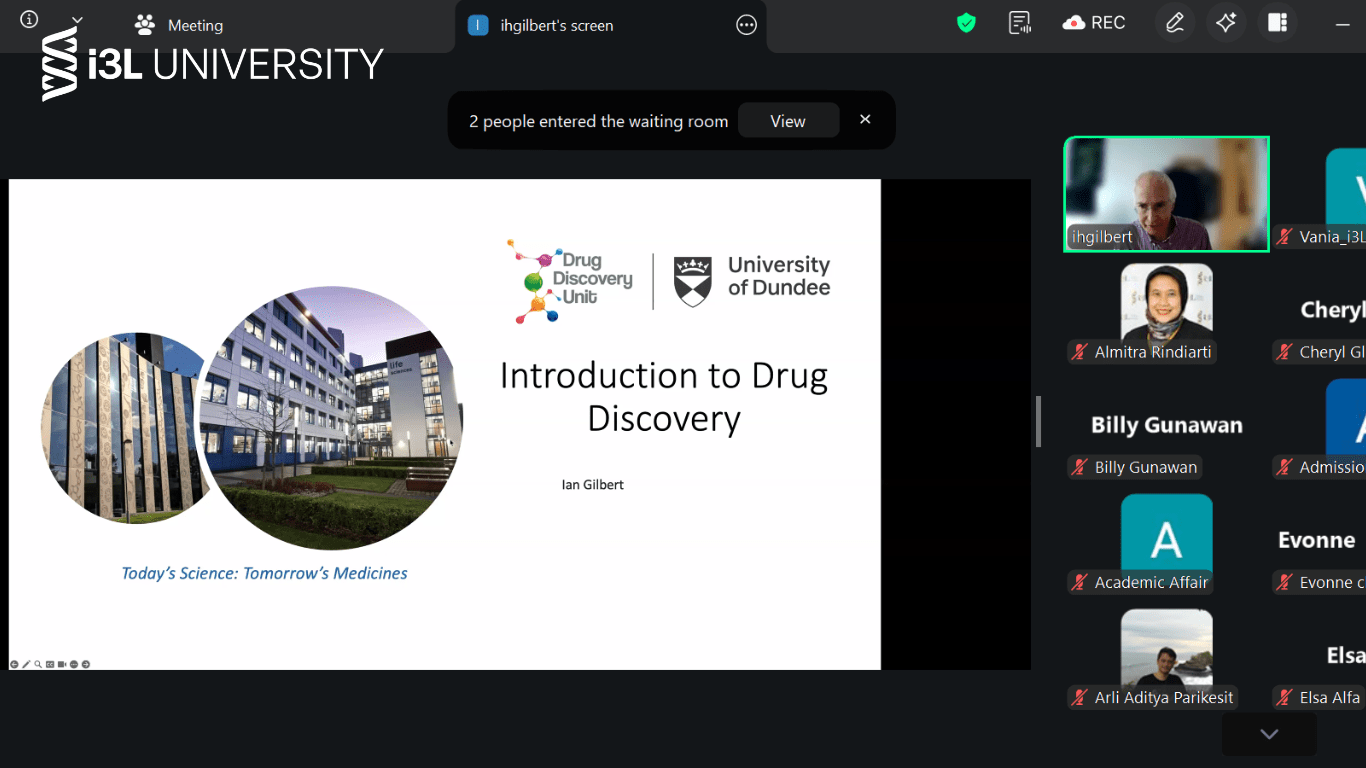
Jakarta, June 12, 2026 – i3L University recently hosted an online presentation by Professor Ian Gilbert from the Drug Discovery Unit at the University of Dundee, United Kingdom (UK), moderated by dr. Almitra Rindiarti Ph.D, the Head of i3L University Biomedicine Department. The session gave students a closer look at the realities of drug discovery, the challenges of developing new medicines, and the important role scientists play in addressing global health issues.
One of the key takeaways from the presentation was how difficult and time-consuming the drug discovery process can be. Professor Gilbert explained that discovering a new medicine is often like “finding a needle in a haystack.” Researchers must identify compounds that are effective against a disease while ensuring they are safe and suitable for human use. From the initial stages of understanding a disease to clinical trials and regulatory approval, the entire process can take 10 to 20 years and cost billions of dollars. Despite these efforts, the vast majority of drug discovery projects never make it to market.
The presentation also highlighted the urgent need for new treatments for infectious and overlooked tropical diseases that continue to affect millions of people worldwide. Diseases such as malaria, dengue fever, and leishmaniasis remain major public health concerns, particularly in low and middle-income countries. Professor Gilbert emphasized that while significant progress has been made in reducing disease-related deaths over the past two decades, many current treatments still have limitations, creating a continued need for innovation in drug development.
Students were introduced to the different stages of the drug discovery pipeline, including target identification, lead optimization, preclinical testing, and clinical trials. The session demonstrated how researchers from various scientific backgrounds work together throughout this process. Drug discovery is highly interdisciplinary, bringing together disease biologists, medicinal chemists, pharmacologists, data scientists, and many other specialists to develop potential treatments.
In addition to discussing the science behind drug discovery, Professor Gilbert shared insights into the work of the Drug Discovery Unit at the University of Dundee. As one of the world’s leading academic drug discovery centers, the DDU combines expertise from both academia and industry to develop new medicines, particularly for diseases that have historically received limited research attention. The unit’s work spans a wide range of areas, including medicinal chemistry, artificial intelligence, computational biology, and preclinical research. The session also provided an introduction to the University of Dundee and its Faculty of Life Sciences. Students learned about the university’s strong research culture, diverse academic programs, and vibrant student community. For i3L students, the presentation was especially relevant given the existing double-degree partnership between i3L University and the University of Dundee. Through this program, students can complete their first three years of study at i3L in Jakarta before spending their final year in Dundee, gaining valuable international academic and cultural experiences.
Overall, the presentation offered an insightful look at the challenges and rewards of drug discovery while showcasing the impact of scientific research on global health. Through this PowerTalk, i3L University and the University of Dundee further strengthened their academic collaboration, providing students with valuable exposure to cutting-edge research and international perspectives in the life sciences.