

Undergraduate Programs:
School of Health and Life Sciences
School of Business and Management
Postgraduate Program:
Professional Program:
Pharmacist Professional (Apoteker)
Organic vs Synthetic Preservatives in Skincare:
Safety, Stability, and Consumer Perception
Jakarta, 19 February 2026 – The trend of using natural ingredients in organic skincare products continues to increase along with growing consumer awareness of the safety and sustainability of cosmetic products. According to a 2026 market analysis from Future Market Insights, the global natural cosmetics market is projected to reach USD 96.4 billion by 2036, with a compound annual growth rate (CAGR) of 5.7%. This growth indicates rising market interest in natural cosmetic products and the potential for growth in the cosmetics industry over the coming years, including the development of effective and safe preservative systems.
The transition to natural ingredients certainly poses a challenge for formulators. Organic ingredients are more susceptible to oxidation, requiring effective formulation strategies and preservation systems that do not rely on synthetic preservatives.
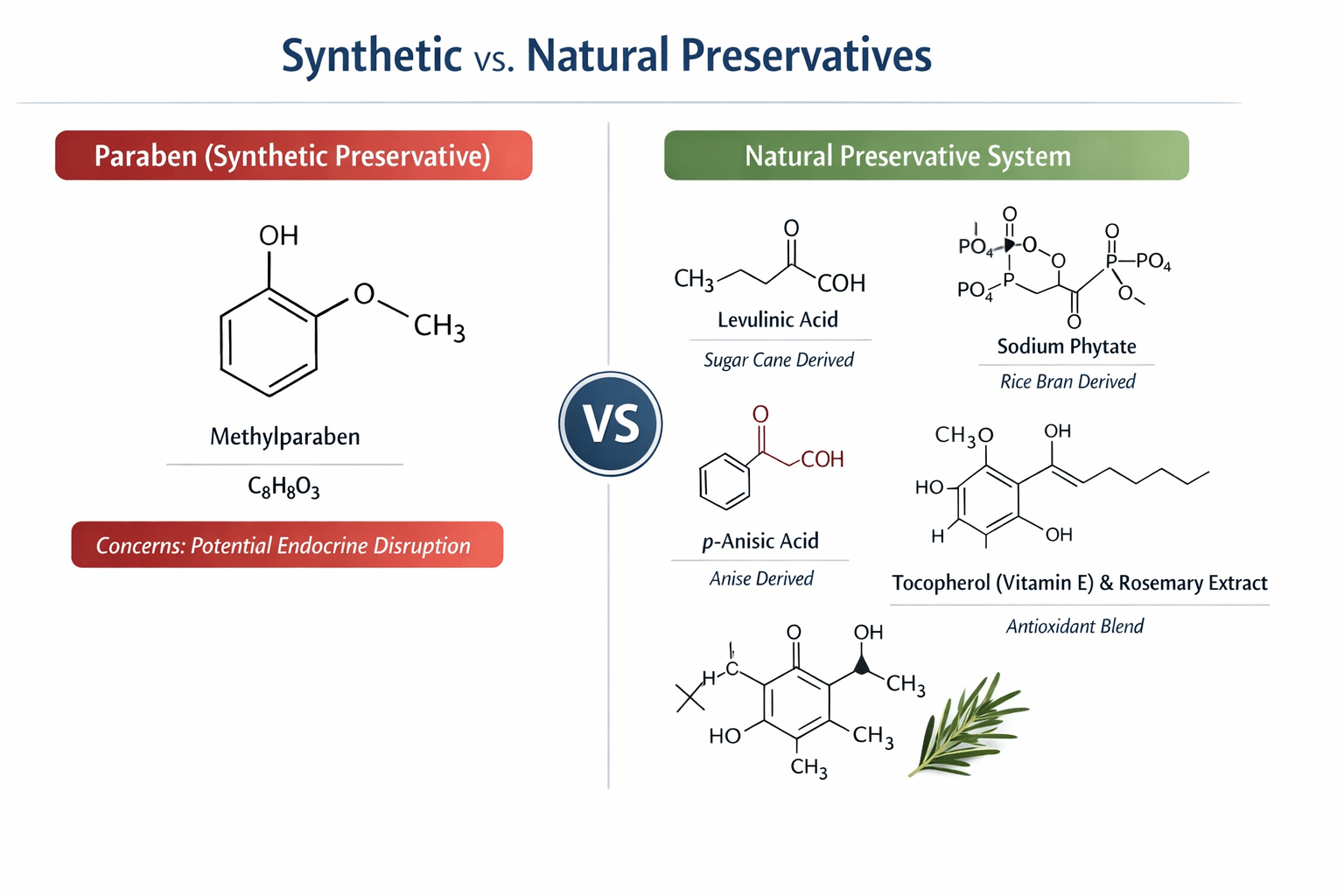
Synthetic preservatives, such as parabens and phenoxyethanol, are widely used because they are stable, consistent, and effective at low concentrations. Synthetic preservatives have a clear, consistent chemical structure, making their performance relatively predictable across various formulations, both water-based and emulsion-based. From a technical perspective, this makes it
easier for formulators to ensure products remain safe from microbial contamination throughout their shelf life. However, some consumers remain concerned about synthetic ingredients, particularly regarding skin sensitivity and long-term exposure, even though their use is restricted and regulated.
Meanwhile, organic preservatives typically derive from organic acids, plant extracts, or essential oil components with natural antimicrobial activity. These ingredients are more readily accepted by consumers seeking products with a natural and sustainable ethos. From a formulation perspective, the effectiveness of organic preservatives can be influenced by several factors, including pH, temperature, and formulation composition; therefore, they are often combined with other strategies to ensure optimal protection. Although their formulation is more challenging, natural preservatives offer added value in terms of perceived safety and sustainability, which are increasingly important in today’s skincare products.
From a user perspective, natural or organic preservatives are often considered safer for skin than synthetic preservatives, although scientifically, product safety is determined by concentration, formulation stability, solubility, and individual skin response, not solely by the ingredient’s origin. For formulators, using natural preservatives poses challenges in maintaining antimicrobial effectiveness and product stability, particularly because naturally derived ingredients are more sensitive to environmental conditions than some synthetic preservatives. For example, polyphenols, a natural preservative, are sensitive to environmental conditions, such as pH, temperature, and oxygen. From a raw material supplier perspective, this increasing demand is driving innovation in naturally based preservatives, which must still meet standards for effectiveness and consistent quality. Because they are derived from plants (natural), the composition of natural preservatives can vary depending on the plant species and cultivation conditions. Meanwhile, regulators continue to prioritize safety, scientific data, and usage limits for both natural and synthetic preservatives to ensure consumer protection and compliance with cosmetic regulations.
Amid the growing trend toward natural ingredients in organic skincare products, a better understanding of organic and synthetic preservatives is needed across consumers, formulators, raw material suppliers, and regulators. Today, modern cosmetic products must not only keep pace with market trends but also be demonstrated to be safe, effective, and compliant with applicable regulations. Therefore, understanding the differences between natural and synthetic preservatives is essential to ensure that decisions in the development of organic cosmetics are based on scientific evidence rather than trends.

i3L University’s Skinovation is an innovative cosmetic testing center in Indonesia that offers customizable, science-driven solutions, to help brands validate their claims with confidence.
By combining sensory studies, modern multi-probe analyzer, and cutting-edge in vitro testing, we empower cosmetic producers to strengthen product credibility and succeed in both local and global markets.
Undergraduate Programs:
School of Health and Life Sciences
School of Business and Management
Postgraduate Program:
Professional Program:
Pharmacist Professional (Apoteker)
Undergraduate Programs:
School of Life Sciences
School of Business
Postgraduate Program:
Professional Program: