
Integrating SaaS Application to Business Workflow
Jakarta, 24 April 2026 – Enterprises today rely on an enormous number of applications. On average, enterprises use up to 897 applications, yet 71% of them remain unintegrated and this figure has not changed significantly over the past 3 years (2023–2025). As a result, data is scattered across dozens of platforms, teams manually re-enter the same information multiple times, and business decisions are slowed down by a lack of real-time visibility.
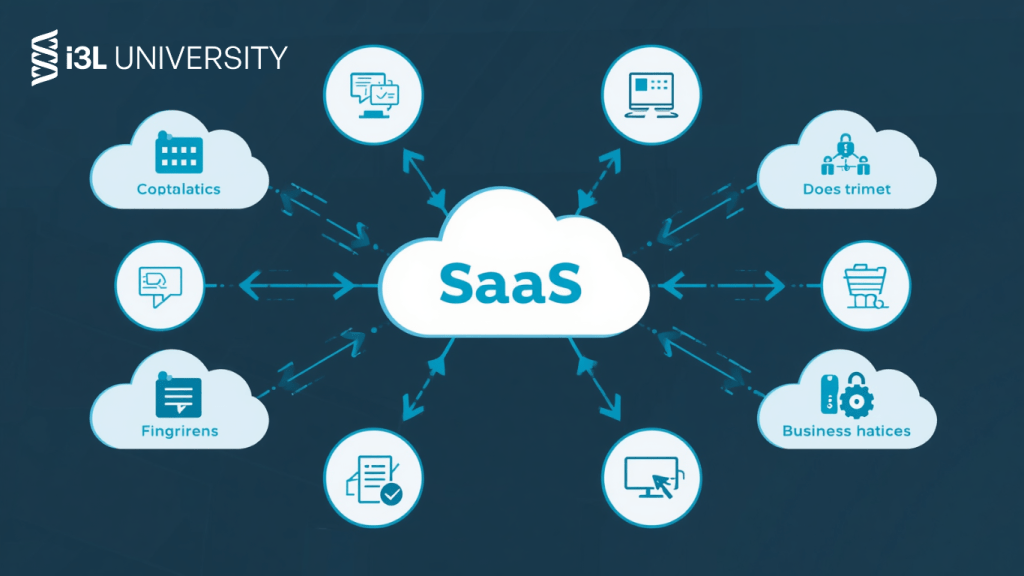
This is where SaaS integration in business workflows becomes crucial. Instead of allowing each application to operate independently, SaaS integration connects everything into an integrated and automated ecosystem, streamlining data flow, reducing manual work, and helping teams make decisions based on up-to-date data.
This article will discuss what SaaS integration is, why it is important for business competitiveness, how it works, the available integration methods, and how companies in Indonesia can build an integrated software ecosystem.
SaaS integration is the process of connecting two or more cloud-based applications (SaaS) so that they can exchange data and run workflows automatically. The goal is to eliminate data silos, reduce duplicate manual input, and ensure consistency of information across platforms.
To make it easier to understand, imagine SaaS applications as separate machines in a factory. Each machine can operate on its own, but without coordination, the production process becomes inefficient. SaaS integration acts as a conveyor belt that connects all these machines, enabling coordinated workflows, automatic data flow, and more consistent outcomes.
It is also important to understand the difference between SaaS and SaaS integration:
Without integration, businesses often face various operational challenges such as:
Simple examples in daily practice:
The average enterprise company uses up to 897 applications. However, around 71% of these applications are still not integrated, and this number has not changed significantly over the past three years (2023–2025). As a result, data is scattered across multiple platforms, requiring teams to input the same data repeatedly, which leads to slower decision-making due to the lack of real-time visibility.
Several key data points highlight the urgency of SaaS integration:
From this data, it is clear that integration is no longer just an additional technical feature. SaaS integration has become a strategic factor that can impact operational efficiency, business speed, and overall competitiveness.
Integrating SaaS applications provides various significant benefits for companies, both operationally and strategically, including:
Repetitive manual tasks can be automated, allowing teams to focus on more strategic work. Cloud implementation has even been proven to deliver up to 4.01x ROI and 2.5x faster payback time compared to on-premise systems.
With SaaS integration, data can move automatically across systems without the need for re-entry, reducing the risk of human error. Real-time integration also helps accelerate decision-making by up to 25%.
All information can be accessed in one integrated dashboard, so teams do not need to switch between platforms. Modern integration platforms can even increase developer productivity by 35–45%.
Centralized customer data enables businesses to deliver more personalized, responsive, and consistent services across multiple channels.
SaaS integration reduces manual work, which helps lower operational costs while minimizing expenses caused by data entry errors.
Integrated systems are more flexible to scale. As the business grows, companies do not need to rebuild systems from scratch when adding new tools or teams.
Technically, SaaS integration works by connecting cloud-based applications using API (Application Programming Interfaces). API act as “bridges” that allow two systems to exchange data in real-time or on a scheduled basis.
Data is typically transmitted in standard formats such as JSON or XML through processes such as, authentication (identity verification) and authorization (data access permissions).
A simple example is when a transaction occurs in an e-commerce application, the data is automatically transferred to accounting software without manual input. Financial reports are always up to date, and the risk of errors is reduced.
Here are several commonly used integration methods:
For companies in Indonesia, building integrations from scratch can be complex and time-consuming. However, using a SaaS ecosystem that is already natively integrated can be a more efficient solution.
One solution to consider is the Mekari software ecosystem, which is specifically designed for business needs in Indonesia, from mid-sized to enterprise scale.
The Mekari ecosystem covers various business functions:
All of these products are designed to be natively integrated, allowing data to flow automatically across departments without the need for complex additional connectors. This approach is ideal for companies that want to build a centralized, efficient, and scalable operational system within a unified platform.
Ready to unify your business operations in one integrated system? Explore Mekari ecosystem now and find the right solution for your business!
i3L University, formerly known as Indonesia International Institute for Life Sciences, offers interdisciplinary life sciences and business programs with global faculty, research, and innovation.
i3L University offers seven undergraduate programs: Biomedicine, Biotechnology, Pharmacy, Food Technology, Food Science & Nutrition, International Business Management, and Innovation & Entrepreneurship, and one master’s program of Master’s in Biomanagement.