
The Impact of Carbon Tax on Bio-Based Industries and Adaptation Strategies
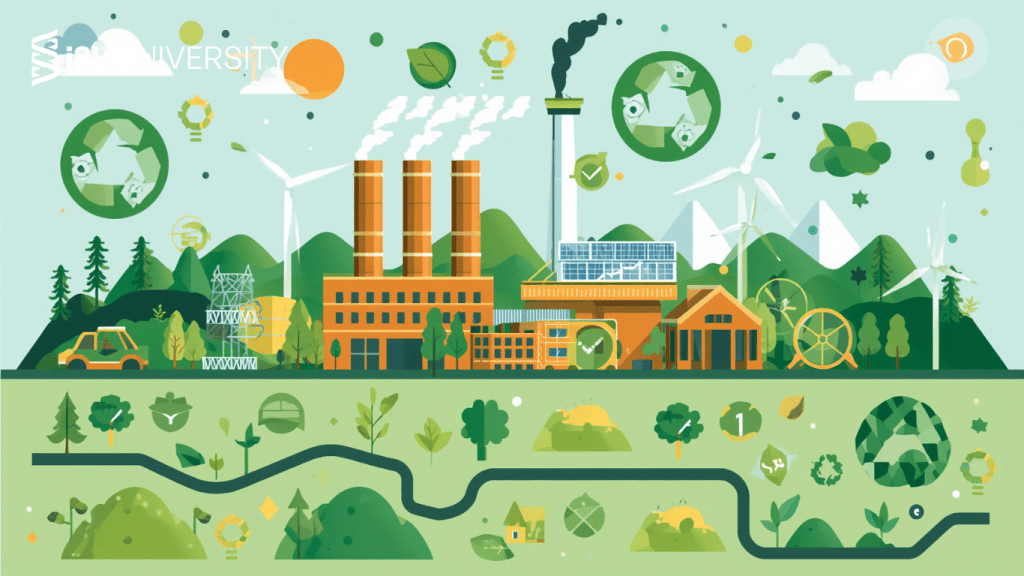
Jakarta, 25 April 2026 – Indonesia has set an ambitious target to achieve Net Zero Emissions (NZE) by 2060 or sooner. This commitment is reinforced through various energy transition policies and environmental economic instruments, one of which is the implementation of a carbon tax. This policy is designed to control greenhouse gas emissions by assigning a cost to carbon-intensive activities.
In practice, this approach reflects a broader global shift toward internalizing environmental costs into economic systems. According to data from the Ministry of Environment and Forestry (KLHK), the energy and industrial sectors contribute more than 70% of Indonesia’s total greenhouse gas emissions, making regulatory measures such as carbon tax essential in climate mitigation efforts. While this policy primarily targets fossil-based industries, its implications are gradually extending to other sectors, including bio-based industries.
Although bio-based industries are often perceived as more sustainable, they are not entirely insulated from regulatory changes. Instead, they are entering a phase where environmental compliance and innovation must go hand in hand. In this context, educational and research institutions such as the Indonesia International Institute for Life Sciences (i3L) play a strategic role in advancing low-carbon technologies.
Through continuous research and innovation, the life sciences sector is uniquely positioned to respond to these changes. Rather than viewing carbon tax purely as a financial burden, it can be reframed as a catalyst for transformation and long-term competitiveness.
To understand its broader implications, it is important to first examine how carbon tax is defined and implemented within the Indonesian regulatory framework.
A carbon tax is a levy imposed on carbon emissions generated from economic activities. Its primary objective is to encourage businesses to reduce emissions by adopting cleaner technologies and improving energy efficiency. By assigning a cost to emissions, the policy creates a financial incentive for companies to shift toward more sustainable practices.
In Indonesia, the legal framework for carbon tax is mainly governed by:
Building on this framework, the government has introduced an initial carbon tax rate of IDR 30 per kilogram of CO₂e, or aligned it with the prevailing carbon market price, whichever is higher. Although this rate is relatively modest compared to global benchmarks, it signals a clear direction toward stricter environmental regulation in the future.
Penting bagi pelaku industri untuk memahami mekanisme pajak karbon dan tarif pajak karbon Indonesia yang berlaku agar dapat memproyeksikan biaya operasional secara akurat. Beyond compliance, this understanding also enables companies to develop more strategic and forward-looking decarbonization plans.
As the regulatory landscape evolves, bio-based industries must carefully assess how carbon tax influences both their cost structure and growth potential.
While these industries generally have a lower carbon footprint compared to fossil-based sectors, they still face indirect exposure to carbon pricing mechanisms. This makes it essential to evaluate both the risks and opportunities that come with the policy.
To begin with, the most immediate impact can be observed in operational costs. Despite their sustainability advantages, bio-based industries still generate emissions through several channels, including:
According to the International Energy Agency (IEA), even bio-based production systems can produce significant indirect emissions (Scope 2 and Scope 3), particularly due to energy use.
As a result, companies may experience:
Taken together, these factors highlight the need for proactive cost management and operational optimization..
However, focusing solely on cost increases would overlook a key dimension of carbon tax. Beyond its financial implications, the policy also creates new opportunities, particularly within the emerging green economy.
Bio-based industries are well-positioned to benefit due to their:
In practical terms, this opens up opportunities for companies to:
According to the World Bank (2024), the global carbon market has surpassed USD 900 billion, underscoring the significant economic potential for industries that can adapt effectively.
As regulatory requirements become more sophisticated, operational adjustments alone are no longer sufficient. Companies must also modernize their administrative systems to ensure compliance and efficiency.
In the context of carbon tax, this means integrating financial and environmental data into a unified reporting framework. Without such integration, companies may face increased risks of errors, inefficiencies, and compliance gaps.
To streamline the reporting of emissions and related taxes, companies should begin adopting an Online tax system that is integrated to minimize data entry errors. By leveraging digital solutions, companies can:
Beyond compliance, digitalization also supports broader initiatives such as Environmental, Social, and Governance (ESG) reporting. As ESG becomes increasingly important for investors and stakeholders, having a reliable digital infrastructure is no longer optional but essential.
Given these challenges and opportunities, bio-based industries must adopt a structured and forward-looking adaptation strategy. This involves not only technological upgrades but also organizational and strategic alignment.
The first step is to strengthen internal capabilities through technology investment. Companies should prioritize:
These investments not only reduce emissions but also improve long-term cost efficiency.
At the same time, innovation cannot rely solely on internal resources. Collaboration with research institutions such as i3L plays a crucial role in accelerating technological advancement.
Through partnerships, companies can benefit from:
This collaborative approach helps bridge the gap between research and real-world implementation.
Finally, adaptation must also extend to administrative readiness. As carbon-related regulations become more complex, companies need to strengthen their internal systems.
Key actions include:
By aligning operational, technological, and administrative strategies, companies can build a more resilient and sustainable business model.
The implementation of carbon tax in Indonesia represents a significant milestone in the transition toward a low-carbon economy. While it introduces new challenges, particularly in terms of compliance and cost management, it also encourages industries to adopt more sustainable practices.
For bio-based industries, this transition presents a unique opportunity. With their inherent sustainability advantages, these industries are well-positioned to lead innovation and participate actively in the growing carbon economy.
Ultimately, long-term success will depend not only on technological innovation but also on a strong understanding of evolving tax regulations and administrative readiness. In this context, Mekari Klikpajak, as an official Tax Application Service Provider (PJAP) partner of the Directorate General of Taxes (DJP), plays a key role in simplifying how businesses manage their tax obligations. Through integrated digital solutions, companies can improve compliance, streamline reporting processes, and reduce administrative complexity. This ease of managing tax responsibilities becomes an important foundation in building an industrial ecosystem that is not only competitive, but also sustainable in the long term.
i3L University, formerly known as Indonesia International Institute for Life Sciences, offers interdisciplinary life sciences and business programs with global faculty, research, and innovation.
i3L University offers seven undergraduate programs: Biomedicine, Biotechnology, Pharmacy, Food Technology, Food Science & Nutrition, International Business Management, and Innovation & Entrepreneurship, and one master’s program of Master’s in Biomanagement.