

Undergraduate Programs:
School of Health and Life Sciences
School of Business and Management
Postgraduate Program:
Professional Program:
Pharmacist Professional (Apoteker)
Generative AI in Practice:
Foundations, Responsible Use, and Real-World Workflows
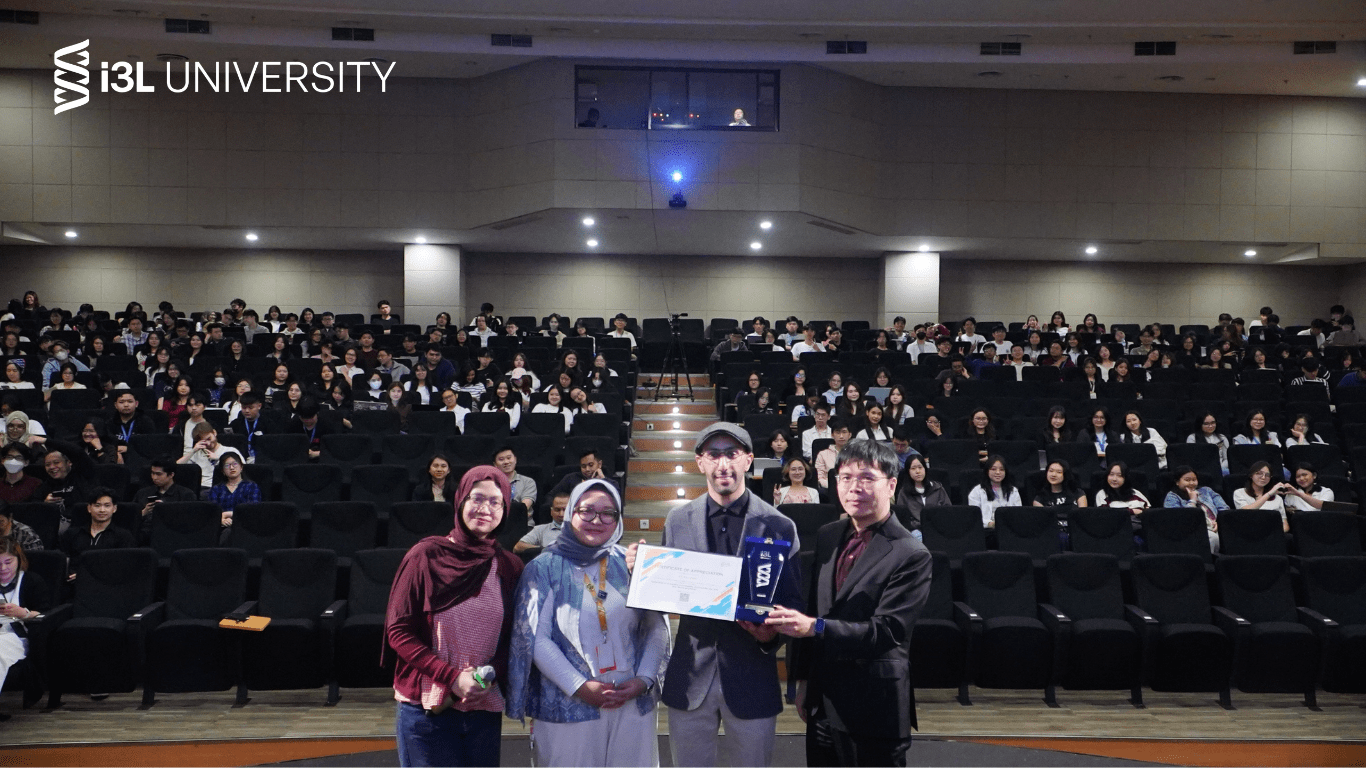
Jakarta, 24 February 2026 – i3L University hosted an exciting PowerTalk on February 13, 2026, titled “Generative AI in practice: Foundations, Responsible Use, and Real-World Workflows” by Ali Alsayegh, Research Assistant from the University of Strathclyde and Head of AI Research, Innovation, and Development in NatQuest UK. This PowerTalk explored how generative AI has changed over time, what generative AI will look like today in providing services to others, and how humans continue to have a fundamental role in the development of the new AI future.
The PowerTalk demonstrates i3L’s continuous commitment to providing students and professionals with practical examples of current scientific and technological advancements that will impact the future of work.
From Early Language Models to Current AI Ecosystem
The PowerTalk began with a discussion of how generative AI development over the last several years has made AI part of our daily lives. The presenter reviewed the public release of the AI model GPT-3 in 2020, followed by the public release of AI models GPT-3.5 and GPT-4, as well as a discussion of the major advancements made between each of these three releases and how they contributed to our current understanding of language and our ability to create content.
The participants learned how these models progressed from experimental prototypes to viable systems for writing, research, design, and problem-solving. What seemed once so futuristic has become part of today’s everyday academic and professional workflows.
What Generative AI Can Do Nowadays
Much of the discussion during this session was about what is being done with Generative AI technology today. The following are some examples of content that users can now produce thanks to the use of Generative AI tools:
– Written materials including essays, reports, etc.
– Images and Visual Design
– Video and Multimedia content
– Technical Drawings or Blueprints
– Integrated text, image, and data outputs
The speaker emphasized that this level of multimodal output was not something the average person had access to a short few years ago. Today’s students and professionals can use this technology to prototype, automate repetitive tasks, and expedite creativity in ways that would have previously taken a long time to do manually or would have been too technical to produce.
In addition to illustrating the technology’s capabilities, the speaker also discussed the advantages and disadvantages of Generative AI. While these systems are productive and offer creative options, they can also produce errors, use misleading images, or deliver outputs that are believable but not substantive.
A key theme of the presentation was that the AI-created output belongs to the human who created it. Users are still responsible for the prompt they used to generate the output and for verifying that the output meets the needs they intended. Critical thinking, verification, and ethical decision-making cannot be delegated to a machine.
Identifying and Understanding the Effects of AI
There was a segment in this session where we explored how to spot AI-produced content by looking at some common features, such as an unusual amount of punctuation, overly complicated vocabulary, and an unnatural amount of repetition. Additionally, during this segment, participants were encouraged to be critical readers and responsible users of AI. Also noted was the growing impact that AI has on the job market. Digital literacy and the ability to use basic AI tools are now expected for many positions with impressive salaries, as more organizations deploy AI to reduce operating costs while increasing productivity. Lastly, due to the rapid adoption of AI in business and the workforce, there have been significant changes in the workforce’s structure.
Examining the Ever Growing AI Landscape
Participants were exposed to multiple platforms of generative AI that support academic research, develop websites, create videos, and assist with content creation, so they will have knowledge of which tool best suits their needs. Following this segment while interacting with panel experts, participants were encouraged to think critically about ethics, skill sets, and future careers in an AI-driven world. Overall, participants are encouraged to be more engaged responsively rather than just technologically with new emerging technologies, as indicated by the presenters in their final remarks; while people may still be in charge of the decision-making process, AI remains a tool that is utilized to assist humans, not a replacement.

Pharmacy is one of the most interesting and well known majors in Indonesia, which focuses on medicine, which covers from drug discovery, development, clinical trial, drug delivery, drug management and also patient counseling. Pharmacy is the bridge knowledge between biomedical scientists and medical doctors, and highly relates to biomedical science, chemistry, pharmacology, pharmaceutical engineering, social science and population health. Pharmacist is among of the most respected professions in the world, whether in the government institute, research institute, pharmaceutical industry, or clinical pharmacy.
Undergraduate Programs:
School of Health and Life Sciences
School of Business and Management
Postgraduate Program:
Professional Program:
Pharmacist Professional (Apoteker)
Undergraduate Programs:
School of Life Sciences
School of Business
Postgraduate Program:
Professional Program: