
Catherine Meliana: From Food Technology to Pastry Chef
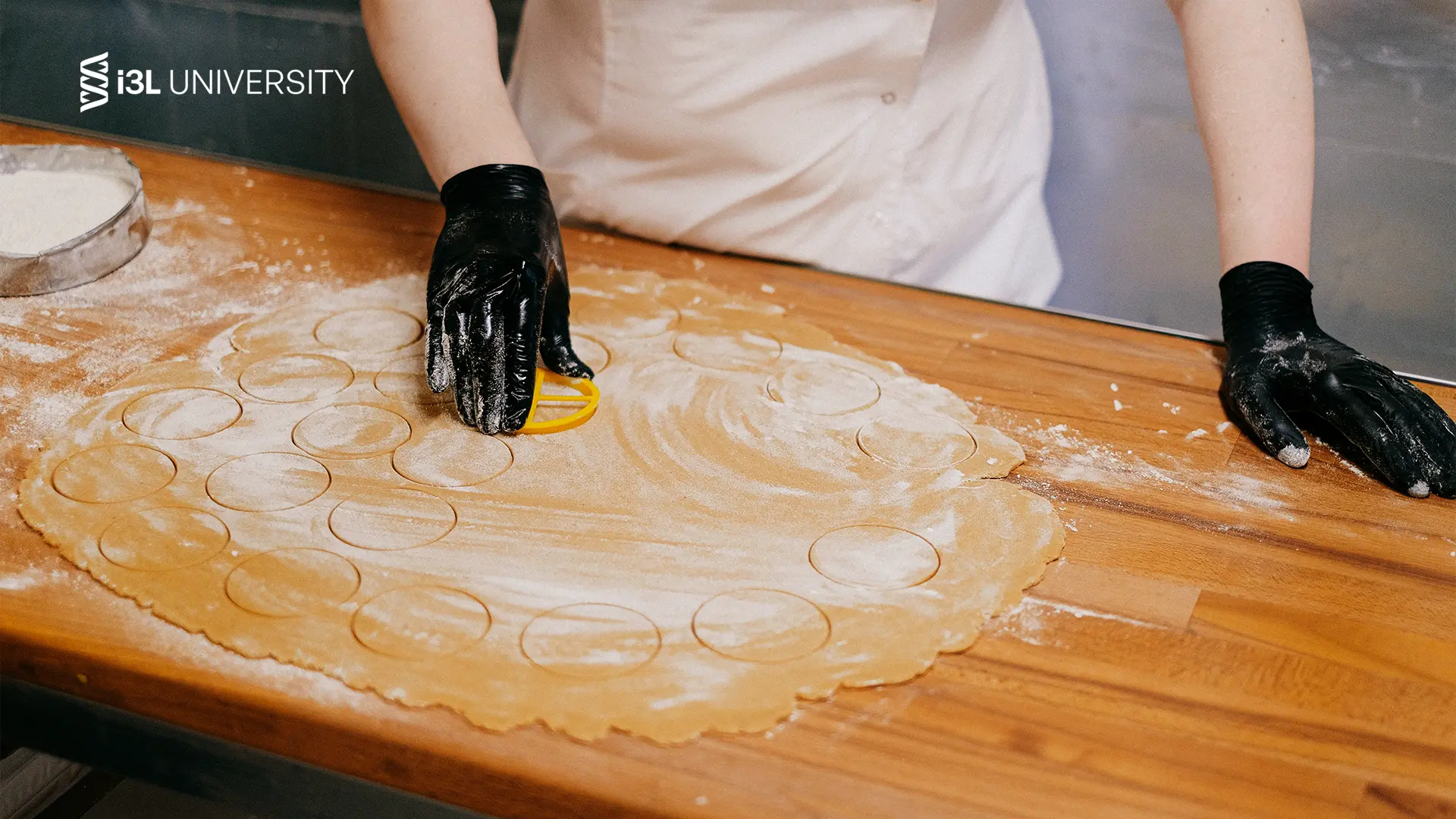
How a Food Technology degree from i3L gave alumna Catherine Meliana the scientific edge behind her career in professional pastry kitchens.
For most people, a perfect cake comes down to following the recipe. For Catherine Meliana, it comes down to understanding why the recipe works.
A 2018 Food Technology graduate of i3L, Catherine is now a pastry practitioner whose career has taken her through bistro, steakhouse, bakery R&D and upscale casual kitchens. She says her food science background shapes almost everything she does at the pastry station, from troubleshooting a failed batch to keeping her team safe and efficient.
Catherine’s love of baking started long before university. Her family was not in the food business, but her grandmother and mother both loved to cook and bake, and their passion rubbed off on her.
“It started with helping to cut out cookies and decorate cakes,” she recalls. “Then I began experimenting on my own, using the recipe books we had at home.”
When she finished high school, Catherine was not yet sure which career to pursue. Her parents encouraged her to choose a science-based degree, reasoning that it would give her more transferable skills than a patisserie diploma alone. That advice led her to Food Technology at i3L.
After graduating, she built her career in professional kitchens step by step. She began as a pastry commis at a bistro-style restaurant, became Demi Chef de Partie at an Italian steakhouse, led seasonal R&D projects for a bakery, and most recently served as Pastry Chef de Partie at an upscale casual restaurant. Alongside her kitchen experience, she sharpened her technique through training at Room4Dessert and APCA Malaysia.
Does a food technology degree really matter in a pastry kitchen? For Catherine, the answer is a clear yes.
“I don’t just read a recipe and produce without knowing the science behind it,” she explains. “I can analyse the role of each ingredient, understand how raw materials turn into the finished product, and troubleshoot when something goes wrong.”
She points to everyday examples: knowing why cake batter should not be overmixed once the flour goes in, or why a liquid thickened with cornstarch must reach a certain temperature to gelatinise properly.
Her training in hygiene and food safety matters just as much. A solid grasp of hygiene standards, she says, reduces failed batches and wasted ingredients. “Many things are common sense to us, like not double-dipping a spoon when tasting food,” she notes. “But people without a food science background may not understand these rules, the reasons behind them, or the consequences of ignoring them.”
Throughout her career, colleagues have often praised Catherine’s work ethic and attitude. She believes the culture at i3L played a big part in shaping both.
“The fast-paced study environment and strict lab standards trained me to stay calm and think of solutions whenever a problem came up,” she says. “In the kitchen and in R&D, not everything goes to plan. Not panicking, troubleshooting straight away and keeping a positive mindset are habits I really carried with me from my time at i3L.”
Catherine’s work goes well beyond production. Each day she also manages time and people, and upholds hygiene and food safety standards, in a fast-paced environment that demands high precision.
Some challenges are technical. Commercial kitchens rarely offer ideal conditions, so she constantly bridges the gap between the ideal recipe and reality, from fluctuating room temperatures to tight timelines during service.
The tougher challenge, she says, is kitchen politics and work culture. “Not everyone shares the same values when it comes to professionalism and accountability,” she says candidly. “Sometimes you face toxic environments, favouritism, or colleagues who avoid responsibility instead of solving problems professionally. That taught me that holding on to your standards and integrity in such an environment takes real strength of principle.”
For students dreaming of a career in the culinary world, Catherine shares the skills she considers essential.
Build practical experience early. Don’t wait until graduation. Take internships or short courses while you are still studying. In professional kitchens, hands-on hours and a feel for the kitchen’s rhythm count for far more than a degree alone.
Communicate with everyone. Learn to connect with everyone in the kitchen, from chefs to the operations team. Be able to translate technical terms into clear instructions for people from all kinds of backgrounds.
Manage your time like a lab session. Bring the same discipline you use for lab reports and practicals, especially the habit of reading a method from start to finish before you begin. “So many people don’t have this habit,” she says. “Mise en place in the kitchen is very much like preparing for a lab session.”
Develop grit and resilience. Culinary work is physically demanding, with at least nine hours a day on your feet and long working hours. In R&D and even daily production, failure can never be avoided completely. There will also be unfair situations and people who prefer finding scapegoats to doing the work. Her advice: don’t take things too personally, never lower your standards to win approval in a toxic environment, and treat every experience, however bitter, as a filter for finding the places that truly deserve your contribution.
Find the right mentor. “Find a good mentor, not just any mentor, but someone who chooses to focus on your strengths instead of amplifying your weaknesses,” Catherine says. “The right environment and guidance will make a huge difference to how far you can grow.”
From decorating cakes with her mother and grandmother to running a professional pastry section, Catherine’s journey shows what happens when passion meets a strong scientific foundation. Her story is a reminder that a Food Technology degree can open doors far beyond the laboratory, all the way to the pastry kitchen.

The Food Technology program at i3L aims to fulfil the needs of the society for sustainable food quality, safety, and security. This field applies the principles of science to ensure safe manufacture, packaging, and distribution. Students will complete a rigorous scientific curriculum that balances classroom lectures with practical sessions in our state-of-the-art laboratories. The Food Innovation Centre allows students to have trainings in our modern, on-campus food processing facilities, in which we strongly encourage our students to create innovative food products.
At i3L, we have broad industry networks and links to leading research organizations around the world to support students in finding suitable internships that can help them pave the way to their dream career in the food industry.