
SGM Cibubur Young Entrepreneur Project Workshop: Spotting Opportunities and Creating Business Ideas
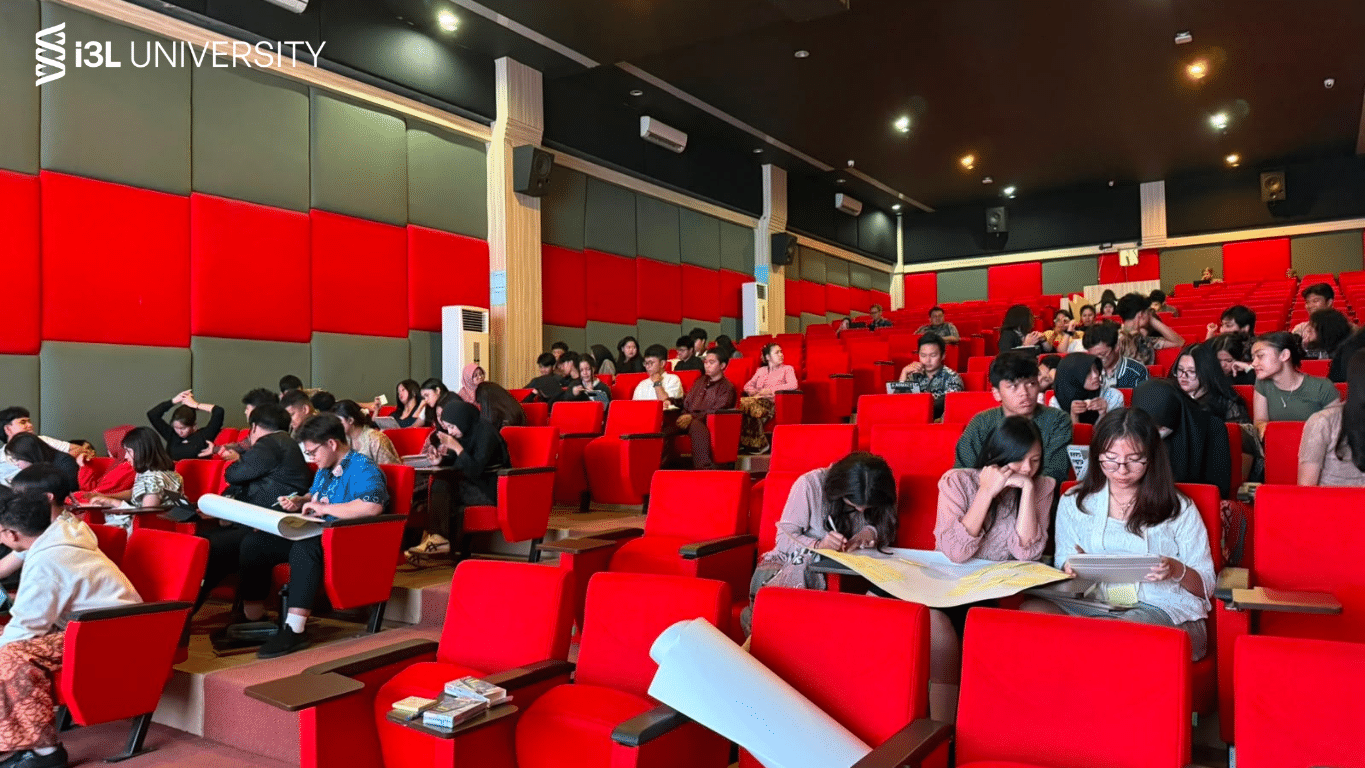
Jakarta, 23 November 2026 – On September 29, 2026, i3L University brought entrepreneurship education directly to SGM Cibubur students through a hands-on Young Entrepreneur Project Workshop. The session had a clear, practical purpose: to teach high school students how to spot real opportunities around them, develop an entrepreneurial mindset, and turn their observations into genuine, creative business ideas.
In a world where economic landscapes are shifting faster than traditional career paths can adapt, equipping young people with entrepreneurial thinking is no longer a supplementary skill, it is a foundational one. This workshop gave SGM Cibubur students an early, structured introduction to that kind of thinking, guided by facilitators committed to making entrepreneurship accessible, relevant, and exciting for the next generation.
For high school students, parents, and educators curious about how entrepreneurship workshops are being brought into secondary school settings in Indonesia, this event offers a compelling model of how universities like i3L can extend their educational impact beyond their campuses and into surrounding communities.
One of the most common misconceptions about entrepreneurship is that it is a skill reserved for adults, business school graduates, or people who already have capital and connections. The reality is quite the opposite. The habits of mind that make a great entrepreneur, such as curiosity, observation, problem-solving, resilience, and creative thinking, are most powerfully cultivated early, before the routines of adult professional life have set in.
High school is precisely the right moment to begin that cultivation. Students at this stage are old enough to observe the world critically and young enough to still be forming their core frameworks for thinking about work, value, and possibility. When they are introduced to entrepreneurial concepts in an engaging, practical way, they do not simply learn about business. They begin to see the world differently, noticing gaps, inefficiencies, unmet needs, and unexplored ideas everywhere they look.
Across Indonesia and the broader ASEAN region, educators, policymakers, and business leaders increasingly recognize that secondary-level entrepreneurship education is a strategic investment in economic resilience and youth empowerment. Workshops like the one held at SGM Cibubur are part of a larger movement to make that investment concrete and accessible, one school and one cohort of students at a time.
At the heart of the SGM Cibubur workshop was one of the most fundamental and teachable entrepreneurial skills: spotting opportunities. While it might seem like a talent some people are simply born with, opportunity recognition is a learnable practice rooted in disciplined observation, empathy, and a willingness to question what everyone else accepts as normal.
Opportunities exist wherever there is a problem that hasn’t been solved well, a need that isn’t being adequately met, a friction people have learned to tolerate, or a resource that’s underutilized. The challenge for most people, especially students who have grown up accepting the world as it is, is developing the habit of noticing these gaps rather than walking past them.
The workshop guided students through practical frameworks for opportunity spotting, encouraging them to see their daily experiences, school environment, communities, and relationships as rich sources of entrepreneurial insight. What frustrates people around you? What do your friends complain about but cannot easily fix? What service does your neighborhood need but does not have? These questions are not abstract business school exercises. They are the starting points for many successful businesses. By anchoring opportunity recognition in the students’ own lived experiences, the workshop made the concept immediate, personal, and genuinely exciting.
Spotting an opportunity is only the first step. The next, and in many ways the more creative challenge, is learning how to transform that observation into a viable, distinctive business idea. This is where entrepreneurial thinking truly comes alive, and it is the skill that the workshop devoted significant attention to developing in the SGM Cibubur students.
Thinking like an entrepreneur means shifting from a passive consumer mindset to an active creator mindset. It means asking not just what is wrong or missing, but imagining what could be built to address it, and then pushing further to ask how that solution could be made uniquely valuable, more accessible, more affordable, more enjoyable, or more meaningful than anything that currently exists. This is the generative phase of entrepreneurship, where ideas take shape, and students often surprise themselves with the originality and relevance of what they conceive.
The workshop used structured creative exercises to help students move through this process, challenging them to build on their opportunity observations and push toward concrete, differentiated business concepts. By requiring students to think about who their idea would serve, what problem it would solve, and what would make it stand out, the session introduced foundational elements of business model thinking in a way that felt engaging and achievable rather than intimidating. The goal was not to produce polished business plans but to show that every student in the room already has the raw material of entrepreneurial thinking and that with the right prompts and practice, that raw material can become genuinely compelling ideas.
The Young Entrepreneur Project Workshop at SGM Cibubur reflects a broader commitment by i3L University’s School of Business and Management to bring entrepreneurship education beyond the university gates and into the communities and schools of Jakarta and beyond. This outreach recognizes that the university’s responsibility to society does not end with its enrolled students but extends to the wider ecosystem of young people who may one day choose to study here or who may simply carry forward the entrepreneurial spark a single workshop helped ignite.
For SGM Cibubur students, the workshop offered something rare: a direct encounter with entrepreneurial thinking at a stage in their education when most of their learning is still largely theoretical and subject-based. The experience of being challenged to observe, imagine, and create within a supported, encouraging environment can leave a lasting impression, one that may surface years later when a student faces a career crossroads, launches a first venture, or simply decides to approach a problem differently because they once learned that problems are really just opportunities in disguise.

Innovate. Build. Impact.
Join the Innovation and Entrepreneurship Program at i3L, where you learn by doing. From day one, you’ll work on real projects—developing business ideas, designing prototypes, and testing solutions that address real-world challenges in life sciences and beyond.
Through incubation programs, mentorship from industry experts, and collaboration with startups and research centers, you’ll gain the skills and experience to turn innovative ideas into sustainable ventures.
Graduate not just with a degree, but with a portfolio of projects and a startup-ready mindset. At i3L, you don’t just study innovation—you practice it.