
Understanding Microglia in Neurodegenerative Diseases: Online Powertalk by University of Dundee Researcher at i3L
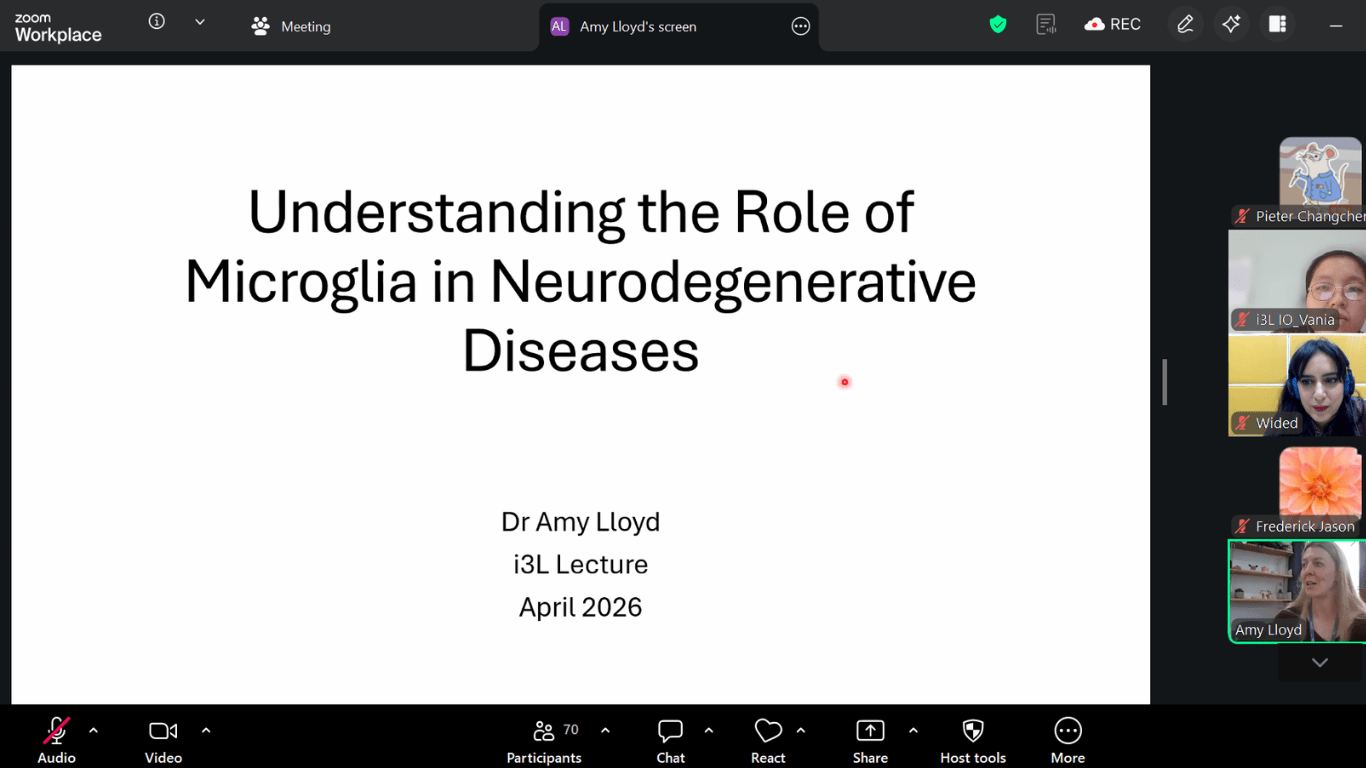
Jakarta, 05 May 2026 – i3L University recently held an online powertalk featuring Dr. Amy Lloyd from the University of Dundee, moderated by Wided Kouidhi, B.Sc., M.Sc., PhD, one of i3L University Biomedicine faculty. The session focused on the role of microglia in neurodegenerative diseases and introduced students to how current research is helping scientists better understand conditions like Alzheimer’s disease and multiple sclerosis.
What are Microglia?
During the lecture, Dr. Lloyd explained that the brain is made up of different types of cells, including neurons and several types of glial cells. Among these, microglia act as the brain’s immune system. First identified by Pío del Río Hortega in 1932, microglia are responsible for monitoring the brain and responding to damage, infection, or other problems. Moreover, they play many important roles, such as clearing debris, regulating inflammation, and supporting connections between neurons. Because of their flexibility, microglia can either help protect the brain or contribute to disease depending on their state.
Microglia in Disease
One of the key topics discussed was how microglia are involved in diseases like multiple sclerosis. Other than that, Dr. Lloyd explained that microglia can switch between pro-inflammatory and pro-regenerative states. Maintaining the right balance between these states is important, as too much inflammation can prevent proper recovery. She also covered how microglia are involved in Alzheimer’s disease.
Modern Research Approaches
Dr. Lloyd also introduced proteomics, a method used to study proteins in cells to understand their behavior. At the University of Dundee, advanced facilities such as mass spectrometry are used to support this research. She also mentioned the use of human stem cell models (iPSCs) to study microglia in a more accurate, human-based system.
Learning from International Experts
The session gave students a clearer understanding of how research in neuroscience is conducted and how it connects to real-world health issues. It also showed how studying microglia could lead to new approaches in treating neurodegenerative diseases. Through events like this, i3L University continues to provide opportunities for students to learn from international researchers and stay updated on current developments in science.