
Understanding Modern Cancer Research: University of Sheffield Professor Delivers PowerTalk at i3L
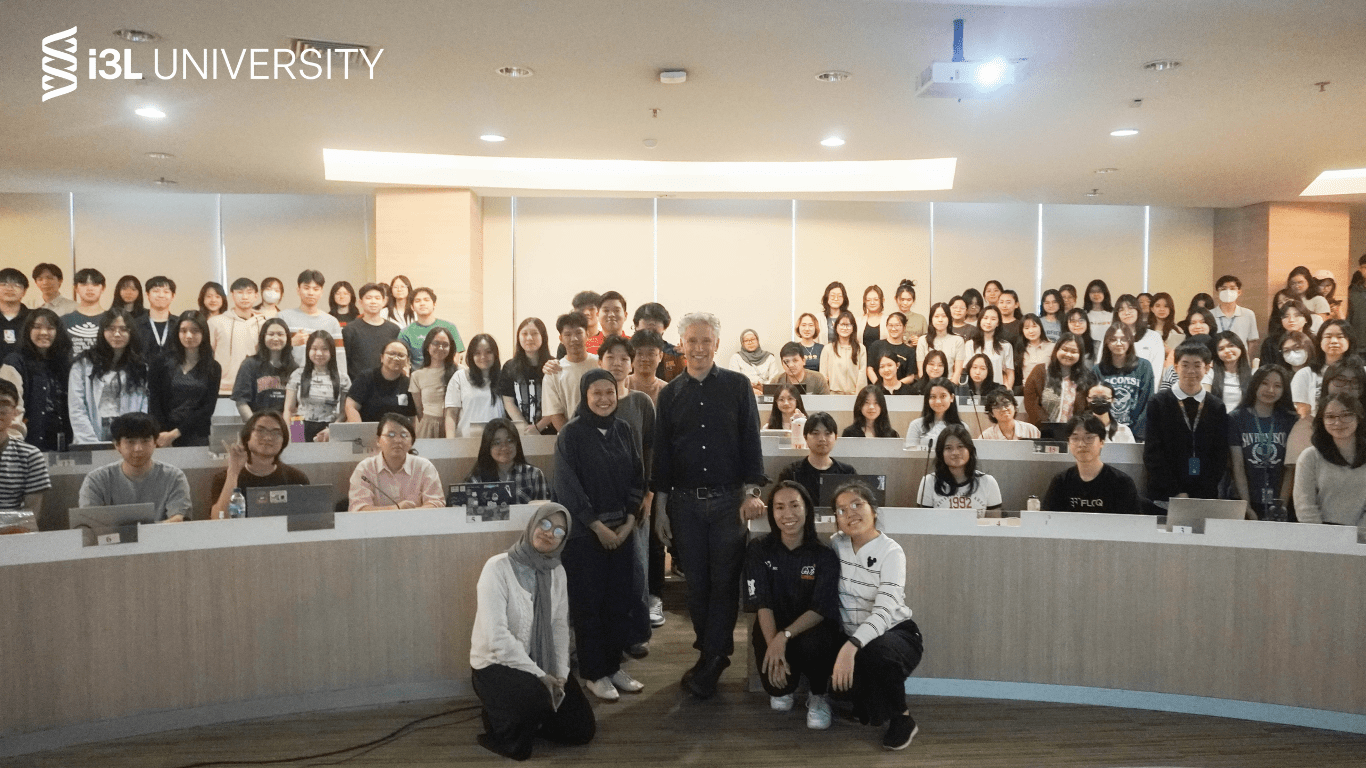
Jakarta, 30 March 2026 – i3L University recently welcomed Professor Andrew Beckerman from the University of Sheffield in the United Kingdom (UK) for an insightful PowerTalk on modern cancer research. The session, moderated by dr. Almitra Rindiarti Ph.D, introduced students and faculty to how scientists today study cancer using genetics, data analysis, and new technologies to develop more effective treatments. The visit reflects i3L’s ongoing effort to connect its academic community with international researchers and expand opportunities for scientific learning and collaboration.
During the talk titled “Advances in Cancer: From Hallmarks to Genetics,” Professor Beckerman explained the basic science behind how cancer develops in the human body. Cancer occurs when certain cells grow uncontrollably and spread to other parts of the body. He explained that tumors generally fall into two categories: benign (non-cancerous) tumors, which grow slowly and stay in one location, and malignant tumors, which can spread to nearby tissues and other organs through a process known as metastasis. By understanding these changes happening at the cellular and genetic level helps scientists design better ways to treat the disease.
Professor Beckerman provided a presentation regarding the increase in the incidence of the disease and the projections that by the year 2050 the cancer incidence for countries in the ASEAN region, for example, Indonesia, Malaysia, Thailand, could be approximately 90% higher. Differences in lifestyles, economic development, and accessibility to healthcare will have an impact on the ways cancer will affect various areas of the region. These challenges establish the need for continued research and international collaboration to develop interventions for the prevention and treatment of the disease.
A key topic presented in the session was the Hallmarks of Cancer. The Hallmarks of Cancer represent the common biological characteristics that cancer cells develop in order to grow uncontrollably, evade normal regulatory mechanisms, and to spread to other parts of the body. The identification of these common biological characteristics provides an opportunity for researchers to understand more about how cancer cells operate and to find methods to slow down their growth.
The use of bioinformatics and machine learning continues to influence the way cancer research is performed today. There are currently many research groups utilizing significant amounts of biological data such as DNA sequences and genetic information as part of their work to identify any patterns related to the occurrence of cancer. By utilizing machine learning methods, researchers can evaluate large datasets and types of patterns much faster than before and able to identify genes or mutations that may be linked to different types of cancers.
New developments in the area of targeted treatments also exist as demonstrated by the discussion of real-life examples of treatments created based upon genetic research. The first example is Herceptin, which is used to treat certain types of breast cancer that exhibit increased levels of a protein called HER2. By binding to the HER2 protein, Herceptin can prevent the HER2 protein from sending signals to the cancer cells tell them to grow. Another example is Gleevec, used to treat chronic myeloid leukemia. Gleevec acts by specifically targeting an abnormal protein responsible for the rapid growth of leukemia cells. By focusing on a specific genetic alteration, Gleevec has improved the overall survival rates of many patients.
The PowerTalk provided valuable insights for i3L students and faculty by connecting fundamental biology concepts with real-world medical advancements. The students attending were really enthusiastic and participated actively throughout the session and even after the session ended. Through events like this, i3L continues to create opportunities for students to learn directly from international experts and stay informed about important developments in global health research. Professor Beckerman’s visit highlights the value of international academic engagement in advancing scientific knowledge and addressing major health challenges such as cancer.